
Find a Dead Valley Roof Fast: 6 Point Inspection Homeowners Need
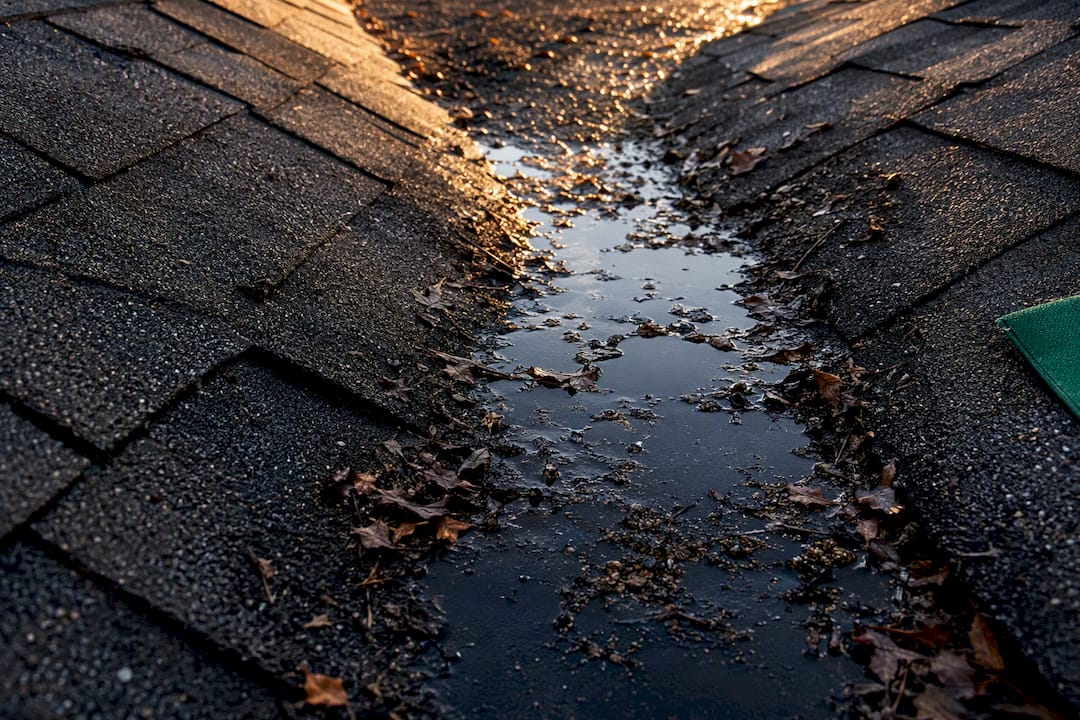
A dead valley is a low or flat spot where two roof planes meet at too shallow a slope to shed water, so runoff pools instead of draining. Left alone, standing water breaks down shingles years ahead of schedule and works its way into the roof deck. If you spot ponding, granule loss, or staining in a valley, get a professional inspection before the next storm.
TL;DR:
- Dead valleys often form after roof modifications like dormers or chimneys, creating low points where water cannot drain properly.
- Standing water accelerates shingle deterioration, causing granule loss, softening of the roof deck, and potential leaks that can damage the structure over time.
- Fixes like crickets, tapered metal pans, or waterproof membranes are effective but vary in cost depending on scope and existing damage.
- Early inspection using binoculars and attic checks after storms can identify recurring stains, debris buildup, or damp sheathing indicating a dead valley.
- Professional repairs should specify membrane type, slope correction methods, and flashing details; vague bids often overlook critical structural fixes.
Table of Contents
- What Causes a Dead Valley Roof to Form?
- Why Dead Valleys Cause Roof Leaks and Damage
- How Do You Know If Your Roof Has a Dead Valley?
- What Are the Best Ways to Fix a Dead Valley Roof?
- When Should You Call a Roofing Contractor?
- How Can You Prevent Dead Valley Problems?
- How Smartroofingpros Approaches Dead Valley Repairs
- Ready to Get Your Dead Valley Inspected?
- A Contractor’s Honest Take on Dead Valleys
- Sources
What Causes a Dead Valley Roof to Form?
Most roof valleys work fine because two sloped planes funnel water down and off the edge. A dead valley happens when that geometry breaks down. The pitch flattens below the point where gravity can clear water fast enough, and runoff sits instead of moving.
This usually traces back to design decisions, not bad luck. Common culprits include:
- A dormer or bump-out added after the original roof was built, creating a low junction with nowhere for water to go
- A wide chimney interrupting the roof plane without a cricket to redirect flow around it
- A home addition tied into an existing roofline at a mismatched pitch
- Multiple roof sections converging at a single low point, like an L-shaped or T-shaped house
The IRC’s roof-assembly chapter sets minimum slope and construction standards precisely because flat convergence points like these are where roofs fail first.
Why Dead Valleys Cause Roof Leaks and Damage
Standing water is the core problem, and it does more damage the longer it sits. Asphalt shingles are built to shed water quickly, not hold it. When water pools in a valley, granules wash away faster, the mat underneath softens, and seams that were never meant to stay wet start to fail.
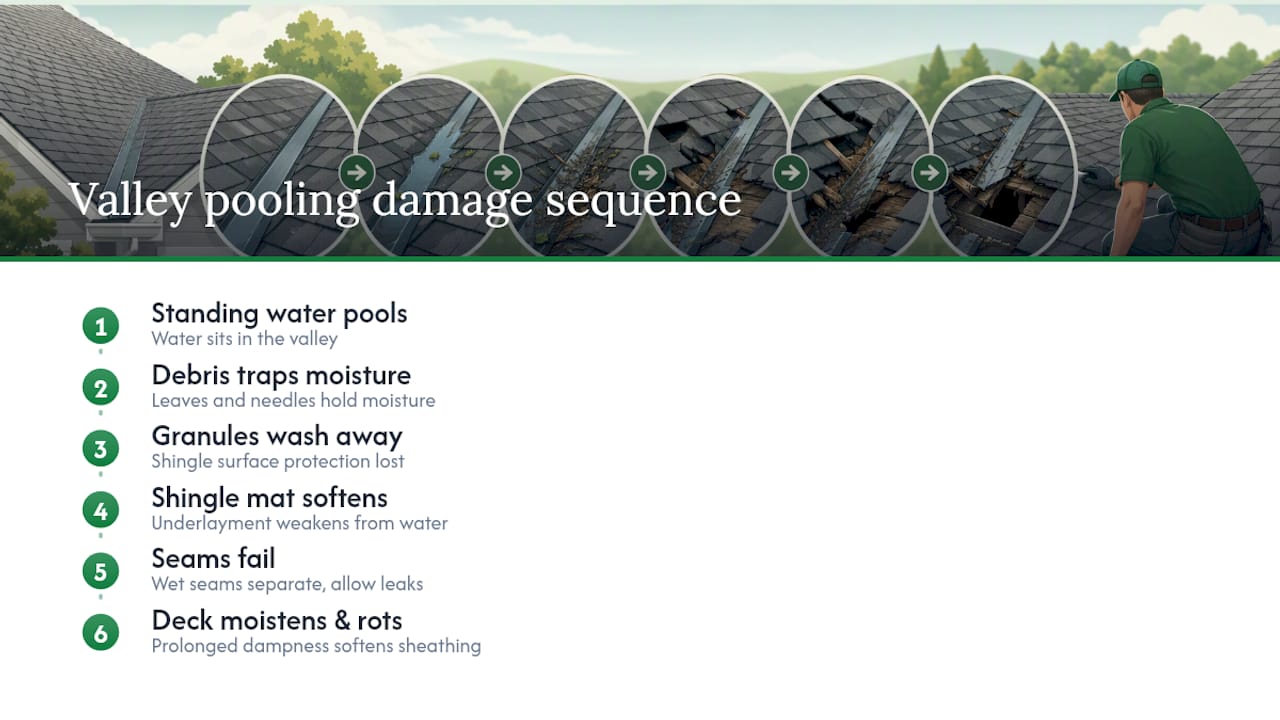
Debris makes it worse. Leaves and pine needles collect in the low spot, trap moisture against the shingle surface, and hold it there long after the rest of the roof has dried. In colder climates, that same pooling refreezes into ice dams, which lift shingle edges and force water sideways under the surface.
Standing water in a valley can cut years off a shingle’s usable life, since the material is being asked to do a job it was never designed for: hold water instead of moving it. By the time a leak shows up on your ceiling, the roof deck underneath has often been wet for months. Sheathing that stays damp long enough starts to soften and rot, turning a flashing repair into a structural one.
How Do You Know If Your Roof Has a Dead Valley?
You don’t need to climb onto your roof to catch most of the warning signs. Start from the ground with a good pair of binoculars, then check the attic if you can access it safely.
- Look for a valley line that reads flat or horizontal instead of angling downward toward the eave.
- Check for a dark ring or stain where debris and standing water have repeatedly collected.
- Scan for patchy moss growth, which signals a spot that stays damp longer than the rest of the roof.
- Note any bare or shiny patches where granules have worn away faster than the surrounding shingles.
- In the attic, look up at the sheathing near that valley for dark staining, rust on nail tips, or a soft, spongy feel when you press on it gently.
- Time your check for right after a heavy rain or a fast thaw, when pooling is easiest to see, and repeat it each spring and fall.
Photograph everything you find, with a wide shot for context and a close-up for detail. That record makes it much easier for a contractor to scope the job accurately instead of guessing during a quick estimate. A homeowner inspection checklist can help you organize what to look for before you call anyone out.
Pro Tip: Skip the ladder if the roof is steep, wet, or icy. A pair of binoculars and a flashlight for the attic will tell you almost everything a first look needs to, without the fall risk.
What Are the Best Ways to Fix a Dead Valley Roof?
Not every fix is built to last, and the price difference between a real repair and a stopgap is often smaller than homeowners expect, once you factor in how often the cheap option needs redoing.
- Cricket or saddle. A small triangular structure framed behind a chimney or dormer that redirects water around the obstruction instead of letting it pool. This is the most durable option for that specific problem and is often only practical during a re-roof, when the framing is already exposed.
- Tapered metal pan. A custom-formed metal channel installed under the shingles that rebuilds the slope inside the valley itself. It’s a strong middle-ground fix when a full cricket isn’t feasible.
- Single-ply or peel-and-stick membrane pan. Materials like TPO, EPDM, or torch-down membrane create a fully waterproofed pocket under the shingles. Waterproofing membranes and metal pans are considered the most reliable structural solutions because they don’t rely on lap-based shingle drainage at all.
- Widened or deepened flashing. Extending metal flashing higher up the walls and further into the valley reduces exposure, though it’s a moderate fix rather than a full rebuild.
- Sealant or spot patching. Caulk over a trouble spot might buy a season, but it does nothing to fix the slope problem underneath, so the same failure returns.
Costs vary widely by scope. A flashing upgrade or small membrane pan on an accessible roof often lands in the low thousands, while a full cricket rebuild involving reframing and new sheathing costs considerably more. If moisture has already reached the deck, plan for interior repair or a broader roof replacement rather than a valley-only fix.
When Should You Call a Roofing Contractor?
Call sooner than you think you need to. A dead valley rarely gets better on its own, and every season it sits unaddressed adds risk to the roof deck below it.
Watch for red flags in any bid you receive:
- A proposal that mentions only caulk, sealant, or “extra shingles” over the problem area, with no structural change
- No mention of membrane type, height up the wall, or how the valley slope will be corrected
- Vague language about “as needed” sheathing replacement instead of a clear inspection-based plan
Ask every contractor for specifics: what membrane they’re using and how far it extends, whether a cricket or tapered pan is part of the scope, the metal gauge for any flashing, and what happens if they find soft sheathing once the shingles come off. Soft decking or wet insulation found mid-repair should trigger a written change order, not a silent patch job. Compare bids on documented scope first, and price second, following the flashing guidance IBHS publishes for vulnerable roof intersections.
How Can You Prevent Dead Valley Problems?
You can’t change a roof’s geometry with a weekend project, but you can slow the damage while you plan for a permanent fix or save toward one.
- Clear debris from valleys and gutters at least twice a year, more often if you have overhanging trees.
- Check attic ventilation and watch for musty smells or visible moisture, which point to trapped humidity working against your roof from the inside.
- Ask about ice-and-water shield membrane in valleys during your next roof service. It’s a recognized last line of defense against exactly this kind of leak.
- Inspect flashing caulk and seams each spring and fall, since routine seasonal maintenance consistently extends the time before a full repair becomes urgent.
- In snow country, a roof rake or heat cable along the valley can reduce ice buildup as a short-term measure.
How Smartroofingpros Approaches Dead Valley Repairs
We treat a dead valley as a structural question, not a caulk-gun problem. roofing contractors carry, and every inspection includes photo documentation, moisture checks at the deck, and a written scope before any work starts.
Our proposals spell out membrane type and height, cricket or tapered-pan framing where it applies, flashing gauge, and manufacturer warranty terms in plain language. Homeowners across San Diego, Riverside, and Orange County get a clear picture of what’s being fixed and why, whether the job is a shingle valley or a low-slope repair tied into a flat section of roof.
Ready to Get Your Dead Valley Inspected?
A dead valley rarely fixes itself, and waiting usually means a bigger bill later. A reputable roofing contractor gives homeowners a documented, on-site inspection with photos and moisture readings, typically backed by manufacturer warranties on the actual repair.

During a roof inspection, you’ll get a written scope covering the exact membrane, flashing, and framing details your valley needs, not a verbal guess. Our crews work across the region, including coastal neighborhoods and inland areas facing various environmental exposures, and estimates are provided with transparent pricing. If you’ve spotted ponding, staining, or granule loss in a valley, schedule an inspection with Smartroofingpros and get a straight answer on what it will take to fix it right.
A Contractor’s Honest Take on Dead Valleys
Most homeowners get told their roof “just needs a little sealant” in a trouble spot, and that advice is usually wrong. A dead valley is a slope problem, and sealant doesn’t change slope. It buys a season, maybe two, and then the same water finds the same seam it found before.

What actually surprises people is how often the fix costs less than they feared, and how often the quotes they receive skip the one detail that matters most: what happens to the water once it reaches that low point. A proposal that doesn’t name a membrane height, a cricket detail, or a flashing gauge isn’t really a repair plan. It’s a placeholder.
I’d rather see a homeowner spend a little more time comparing three detailed bids than sign the fastest, cheapest one and find out in two years that the sheathing underneath needed replacing all along. The dead valley’s own failure mechanism rewards patience at the estimate stage far more than it rewards speed.
— David
Sources
- RicoWI roof guide — metal flashing (IBHS)
- What Is a Dead Valley on a Roof? Why It Leaks and How to Fix It (BlueSmartMia)
- Roof maintenance tips to extend your roof’s life span (This Old House)