25% Rule: Roof Coating vs Replacement for Owners & Managers
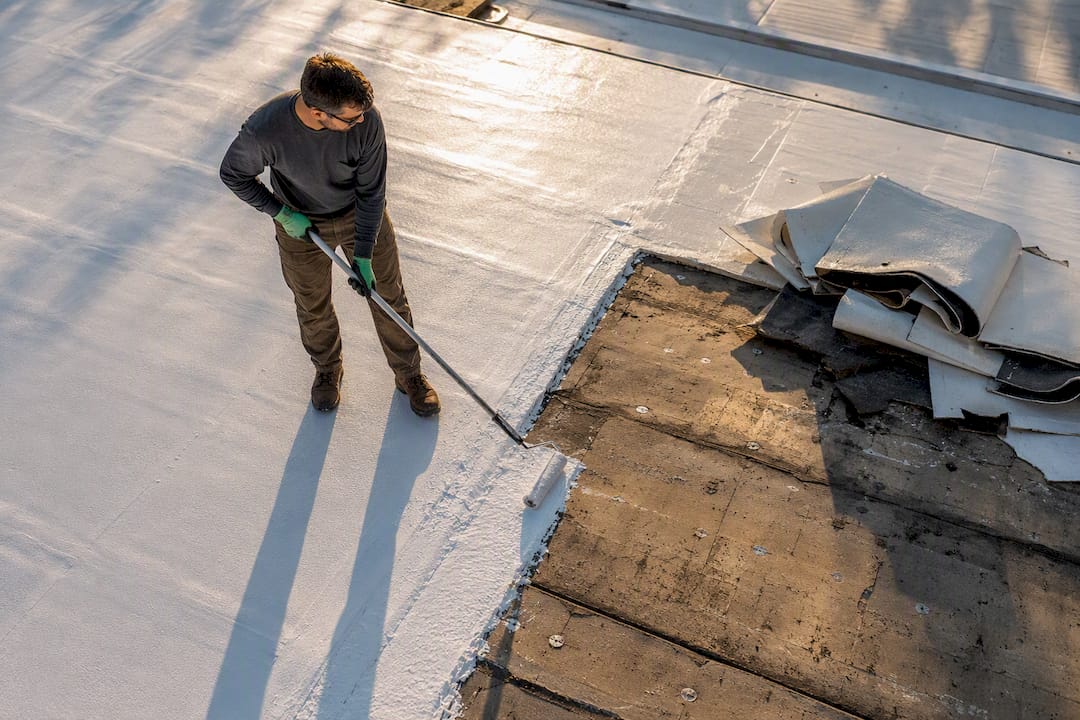
If the deck and insulation underneath your roof are dry and structurally sound, a professionally applied roof coating usually costs far less than tearing off and replacing the system, and it can buy you another decade of service. If moisture has already gotten into the insulation or deck, or the structure is compromised, replacement is the only option that actually fixes the problem. The decisive step before you spend a dollar on either one is a moisture scan.
TL;DR:
- A moisture scan is essential to determine if coating is feasible, as moisture trapped under the membrane can cause early failure.
- Coatings typically cost 50 to 70 percent less than full replacement and can extend a roof’s life by 10 to 20 years with proper maintenance.
- Replacement is necessary if more than 25 percent of insulation is wet, the roof is structurally compromised, or persistent leaks and membrane failure occur.
- Regular inspections and recoat schedules are crucial to maintain warranty coverage and avoid voiding protection.
- The decision should be based on detailed site assessments, including moisture testing, adhesion verification, and condition of the deck, rather than appearance alone.
Table of Contents
- Roof Coating vs Replacement: Weighing the Pros and Cons
- What Do Roof Coating and Replacement Cost Per Square Foot?
- What Inspection Steps Determine If a Roof Qualifies for Coating?
- Which Roofs Are Good Candidates for Coating?
- When Should You Replace Instead of Coat?
- How Should You Plan Maintenance and Recoat Cycles?
- Does Roof Coating or Replacement Affect Property Value and Insurance?
- How Do You Decide Between Coating and Replacement?
- What Mistakes Do Owners Make Choosing Between Coating and Replacement?
- A Practical Approach to the Coating vs. Replacement Call
- Get an Honest Roof Assessment Before You Spend a Dollar
- Where to Verify These Numbers Yourself
- Sources
Roof Coating vs Replacement: Weighing the Pros and Cons
Every roof coating vs replacement decision comes down to trade offs between upfront cost, disruption, and how much life is really left in what’s up there. Coatings and full tear-offs solve different problems, and knowing which one applies to your roof keeps you from overpaying or underfixing.
Roof coating advantages:
- Lower installed cost than a full tear-off in most cases
- Installation typically wraps up in days, not weeks
- Minimal disruption to tenants, employees, or your household
- Keeps old roofing material out of the landfill
- Reflective coatings can cut cooling costs through improved reflectivity
Roof coating drawbacks:
- Does nothing to fix a rotten deck or wet insulation
- Requires scheduled recoats to stay under warranty
- Sensitive to ponding water and poor adhesion prep
- Warranty terms are often shorter and more conditional
Roof replacement advantages:
- Resets the entire system’s service life
- Fixes structural issues coatings can’t touch
- Comes with one long, straightforward warranty
- Opens the door to upgrades like solar-ready decking
Roof replacement drawbacks:
- Highest upfront investment of any roofing solution
- Disruption often runs one to two weeks or longer
- Generates significant tear-off waste for disposal
What Do Roof Coating and Replacement Cost Per Square Foot?
Cost is usually where this decision gets made, and the gap between the two options is wide. Restoration coatings typically run about $2 to $6 per square foot installed, while full commercial replacement runs $5.50 to $25 per square foot, meaning coating frequently costs 50 to 70 percent less than tearing off and starting over.
Lifespan is where the math gets interesting. A well-specified coating can extend a roof’s service life by 10 to 20 years depending on thickness and chemistry, but most coating warranties require a recoat partway through that window. A full replacement resets the clock entirely and typically carries one warranty covering the whole system.
| Factor | Roof coating | Full replacement |
|---|---|---|
| Installed cost | $2–$6 per sq ft | $5.50–$25 per sq ft |
| Typical service life added | 10–20 years | Full new system life |
| Recoat/maintenance need | Yes, periodic | No, until end of life |
| Disruption | Days | 1–2+ weeks |
Run the numbers over 20 years and a sound roof that gets coated twice can still land well below the cost of one full replacement, even after accounting for recoat labor. Prices swing by region, roof type, and access difficulty, so treat these ranges as a starting point and get a local, on-site quote before committing either way.
What Inspection Steps Determine If a Roof Qualifies for Coating?
A coating is only as good as what’s underneath it, which is why the inspection matters more than the material choice. Sealing a coating over a wet substrate traps moisture in place, and that typically leads to blistering, adhesion failure, and a shorter total lifespan than the roof would have had if left alone.
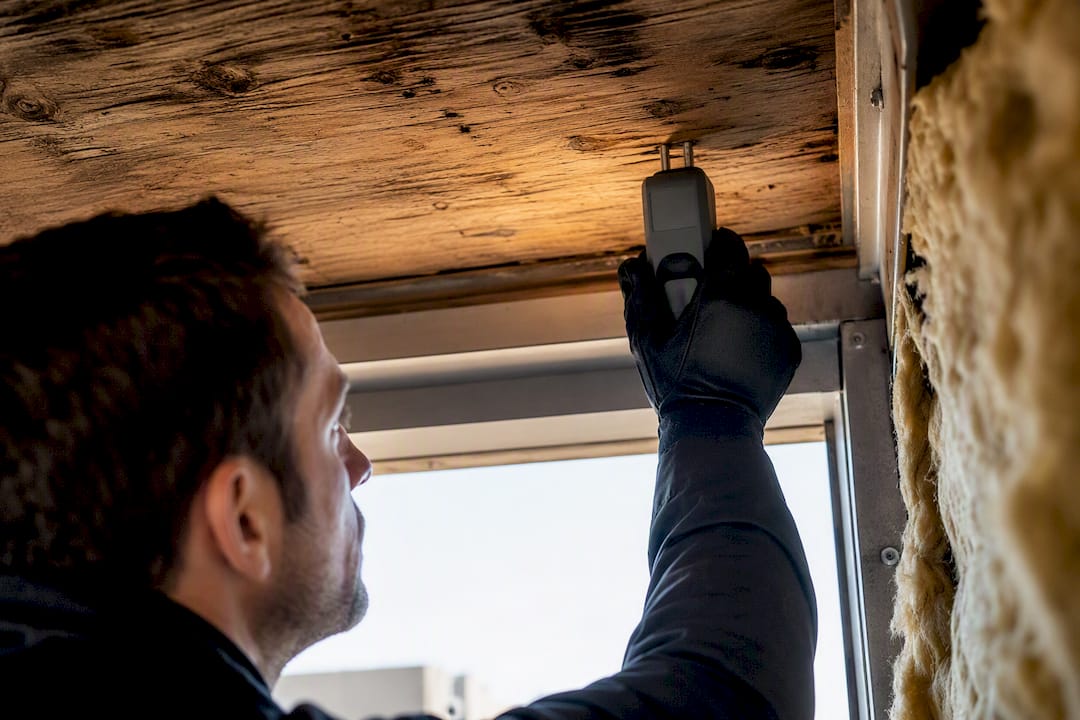
- Infrared and capacitance moisture scans. These non-invasive scans map wet zones under the membrane without cutting into the roof.
- Core sampling. A small core cut confirms what the scan shows and lets an inspector physically check insulation and deck condition.
- Adhesion and pull testing. This verifies the existing substrate can properly bond with a new coating before any material goes down.
- The 25 percent threshold. Industry guidance generally treats roughly 25 percent wet insulation as the tipping point. Below it, restoration is usually viable. Above it, replacement becomes the safer call.
- Red flags that disqualify coating. Rotted decking, chronic leaks, major seam failure, and standing ponding water are conditions manufacturers flag as reasons to skip coating entirely.
Which Roofs Are Good Candidates for Coating?
Not every roof is a coating candidate, but plenty are, and knowing your roof type narrows the decision fast.
- Low-slope membranes: TPO, EPDM, and built-up roofs coat well when dry and structurally sound.
- Metal roofing: Coatings handle rust prevention and reflectivity gains particularly well on metal.
- Spray foam roofs: These accept recoating readily, provided the foam itself hasn’t absorbed moisture.
Coating tends to make the most sense when the roof shows surface wear rather than structural problems, when budget is tight, or when you can’t afford weeks of downtime. Before signing a contract, confirm the insulation tested dry, flashings are repaired, ponding areas are addressed, and an adhesion test passed. Get those four right and coating delivers speed, minimal disruption, and none of the landfill waste that comes with a low-slope tear-off.
When Should You Replace Instead of Coat?
Some roofs simply aren’t candidates, no matter how good the coating product is.
- Insulation saturation above roughly 25 percent, confirmed by a moisture scan
- Rotted, sagging, or deflecting deck sections
- Membrane failure spread across most of the roof rather than isolated spots
- Leaks that keep recurring despite repeated repair attempts
- A preference for one long-term warranty instead of recurring recoat cycles
- Code or insurance rules limiting how many roof layers a building can carry
- A remodel or solar installation that requires a fresh deck anyway
Coating a roof that’s already failing structurally almost always costs more in the long run, since you’re paying for a coating that fails early and then paying for the replacement you delayed. When the substrate is compromised, replacement is usually the cheaper path over 20 to 30 years, even though it costs more upfront.
How Should You Plan Maintenance and Recoat Cycles?
Coatings aren’t a one-time purchase. Manufacturers typically require documented inspections and a recoat on a set schedule to keep the warranty valid, and skipping that step is the fastest way to void coverage you’re already paying for.
- Schedule a professional inspection at least once a year, ideally before and after summer heat cycles
- Check flashing seals and caulking at penetrations every inspection
- Clear drains and scuppers so water never sits long enough to stress the coating
- Track your recoat window against the manufacturer’s stated interval, not a guess
Some owners prefer replacement specifically to avoid this recurring administration, trading a bigger upfront check for one warranty they never have to think about again.
Pro Tip: Keep a simple log of every inspection, recoat, and repair with dates and photos. When it’s time to file a warranty claim, that record is often the difference between a covered repair and a denied one.
roofing contractors carry, and that works specifically with the coastal salt corrosion and wildfire exposure that Southern California roofs face. Every inspection is documented on-site with honest findings, not a sales script.
Does Roof Coating or Replacement Affect Property Value and Insurance?
A roof’s condition shows up directly in both an appraisal and an insurance quote, and coating versus replacement affects each differently. A full replacement resets the roof’s age on record, which matters because many insurers price premiums partly on roof age and material. A newly replaced roof with a documented warranty often qualifies for better terms than one patched together with a coating history, particularly in wildfire-adjacent zones where insurers scrutinize roofing condition closely.
Coatings can still help. A properly maintained, warrantied coating demonstrates active upkeep, which some insurers view favorably compared to a roof with no maintenance record at all. But a coating doesn’t erase the roof’s actual age, and an appraiser or adjuster who sees the original installation date on file may not credit it the same way a full replacement would.
For resale, buyers and their inspectors ask two questions: how old is the roof, and is there a transferable warranty? A recent replacement answers both cleanly. A coated roof requires more explanation, including recoat history and remaining coverage, which can slow negotiations even when the roof itself is performing fine.
If you’re weighing a sale in the next few years, factor that difference into your decision now. A coating that saves money today but complicates a future sale isn’t necessarily the cheaper choice once you count the negotiation friction and possible insurance premium gap against a straightforward replacement.
How Do You Decide Between Coating and Replacement?
Work through these questions in order, and the right answer usually becomes obvious by the third one.
- What did the moisture scan find? If insulation saturation is under roughly 25 percent and the deck is sound, coating stays on the table. Above that, move straight to replacement planning.
- What’s the age and warranty status of the current roof? A roof already near the end of its rated life is a poor coating candidate even if it tests dry today.
- How much disruption can you tolerate? If downtime is a dealbreaker for a business or household, coating’s days-not-weeks timeline matters.
- What’s your ownership horizon? Planning to sell within a few years favors the cleaner story a replacement warranty gives buyers.
- Do you want one long warranty or periodic recoats? Some owners specifically choose replacement to avoid recoat administration altogether.
- What does the adhesion test show? Even a dry substrate can fail a pull test if prior coatings or contamination prevent proper bonding.
If you answer all six honestly and coating still checks out, get a written scope and cost comparison before signing anything. If replacement wins on even two or three of these, stop pricing coatings and start pricing a full roof replacement instead.
What Mistakes Do Owners Make Choosing Between Coating and Replacement?
The most expensive mistake is skipping the moisture scan and coating a roof based on how it looks from the ground. A membrane can appear fine on the surface while insulation underneath is already saturated, and sealing a coating over that moisture accelerates failure instead of preventing it.
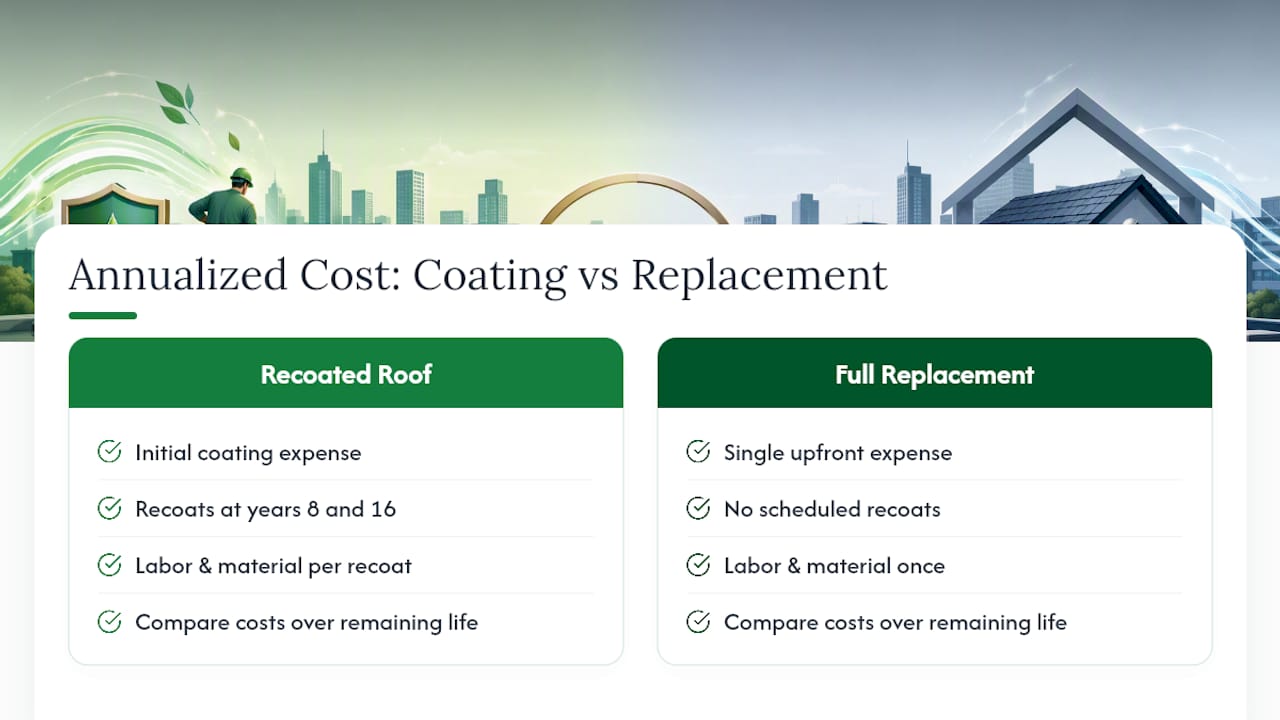
Another common error is choosing the cheaper option without comparing annualized cost. A coating that needs a recoat in eight years and another in sixteen can end up costing close to what a replacement would have, once labor and material for each recoat cycle get added up. Run the math over the roof’s expected remaining life, not just the sticker price.
Owners also underestimate how strict warranty terms can be. Missing a required inspection or skipping a scheduled recoat can void coverage entirely, leaving you with none of the protection you thought you paid for. And some contractors push coating on roofs with visible red flags, rotted decking or chronic leaks, because the job is faster and cheaper to sell. If a contractor recommends coating without first running a moisture scan and adhesion test, get a second opinion before signing.
A Practical Approach to the Coating vs. Replacement Call
We treat this as an inspection problem before it’s ever a budget problem. Test the substrate first, then talk numbers. Before any estimate, expect a moisture scan, a core sample where the scan flags concern, an adhesion test, a written scope, and a clear disruption timeline so you know exactly what you’re signing up for.
Case-specific outcomes vary by roof age, material, and exposure, so treat the ranges above as planning figures, not a quote.
— David
Get an Honest Roof Assessment Before You Spend a Dollar
If you’ve read this far, you already know the real decision hinges on what’s happening under the surface, not what the roof looks like from the driveway. A full on-site inspection with moisture scanning is run before recommending coating or replacement, so you get a documented answer instead of a guess.
Every visit includes a moisture map, photos of any problem areas, a written repair-versus-replace scope, and a lifecycle cost comparison so you can see the numbers side by side. Replacement work is backed with manufacturer warranties built for coastal salt exposure and wildfire conditions. If a repair or coating genuinely solves your problem, that’s what gets recommended. If replacement is the safer long-term investment, you’ll see exactly why before agreeing to anything. Schedule an on-site inspection through Smartroofingpros and get a documented, no-pressure recommendation for your roof.
Where to Verify These Numbers Yourself
For a second opinion on any figure in this guide, the Department of Energy’s cool roof guidance explains reflectivity’s role in cooling costs. GAF’s commercial coating guide and Polyglass’s coating comparison cover eligibility and warranty specifics in more technical detail.
Sources
- Cool Roof Coat vs Full Roof Replacement: Restore or Tear Off? — NanoTech
- Roof Coating vs Commercial Replacement — GAF
- Roof Coatings vs Replacement: Which Option Is Right for You? — Polyglass U.S.A.