
$7,000 Surprise? Roof Leak Insurance Deductible for U.S. Homeowners
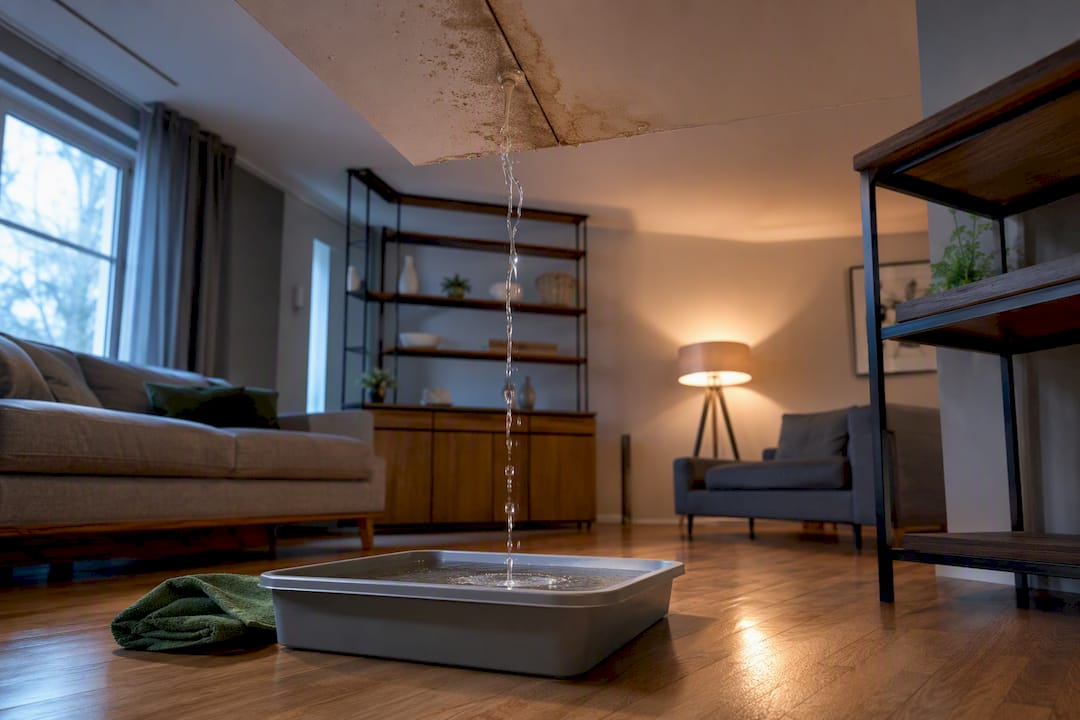
If a covered peril causes your roof leak, you pay your deductible and your insurer covers the rest according to your policy’s settlement method. Three variables decide your actual out-of-pocket cost: what caused the leak, whether your deductible is a flat dollar amount or a storm percentage, and whether your policy pays Replacement Cost Value or Actual Cash Value. The numeric examples and decision checklist below will tell you exactly what to expect before you ever pick up the phone to file.
TL;DR:
- The cost to repair a roof leak depends on the cause, whether a flat dollar or percentage deductible applies, and if the insurer pays replacement cost or actual cash value.
- Wind and hail damage often trigger percentage deductibles based on dwelling coverage, which can result in much higher out-of-pocket costs than flat deductibles.
- Replacement cost value policies pay close to repair costs, while actual cash value policies deduct depreciation, especially affecting older roofs.
- Filing a claim is generally worthwhile only if repair costs exceed the deductible significantly, and obtaining independent estimates can strengthen your position.
- Proper documentation, including photos, repair estimates, and mitigation measures, speeds up claims processing and improves the chance of a fair settlement.
Table of Contents
- Does Your Roof Leak Insurance Deductible Apply Here?
- Flat-Dollar vs. Percentage Deductibles: The Math That Changes Everything
- RCV vs. ACV: The Settlement Method That Decides Your Final Check
- Is Filing a Claim Even Worth It?
- Documenting the Leak: What Insurers Actually Want to See
- Why a Licensed Roofer’s Report Carries Weight With Insurers
- What Your Policy Probably Won’t Cover
- How Adjusters Figure Out What Caused Your Leak
- How Roof Age Changes What You’ll Actually Collect
- Getting Your Insurer to Reconsider a Deductible or Denial
- Why Deductibles Aren’t the Same From One Policy to the Next
- Author Perspective: Practical Advice for Homeowners in the U.S.
- Getting a Straight Answer on Your Roof Damage
- Sources
Does Your Roof Leak Insurance Deductible Apply Here?
Coverage hinges on cause, not on the fact that water is dripping into your living room. Insurers pay for sudden, accidental damage from a covered peril. They don’t pay to fix a roof that failed because it simply got old.
A covered peril typically includes wind, hail, a fallen tree branch, or fire damage that punctures or lifts your roofing material. An excluded cause is wear and tear, gradual deterioration, or a maintenance failure, such as cracked flashing that slowly let water in over several seasons. Insurance experts consistently point out that the cause of the leak, not the leak itself, determines coverage, and deterioration from lack of maintenance is one of the most common exclusions in a standard homeowners policy.
Interior damage sometimes gets evaluated separately from the roof repair itself. Your insurer might cover ceiling drywall and flooring ruined by the leak even while questioning whether the roof damage itself qualifies, depending on how the adjuster reads the cause.
Before you assume anything, do this:
- Pull your declarations page and check for a separate wind or hail deductible.
- Note the date you first noticed the leak, since timing affects how an adjuster judges “sudden” versus “gradual” damage.
- Call your insurer’s claims line early. Waiting weeks to report a leak can itself become grounds for a denial.
Flat-Dollar vs. Percentage Deductibles: The Math That Changes Everything
Most homeowners policies use a flat-dollar deductible, typically within the commonly seen range. If your policy carries a $1,000 deductible and your roof repair costs $2,800, you pay the first $1,000 and your insurer pays the remaining $1,800, assuming the settlement method doesn’t reduce that further.
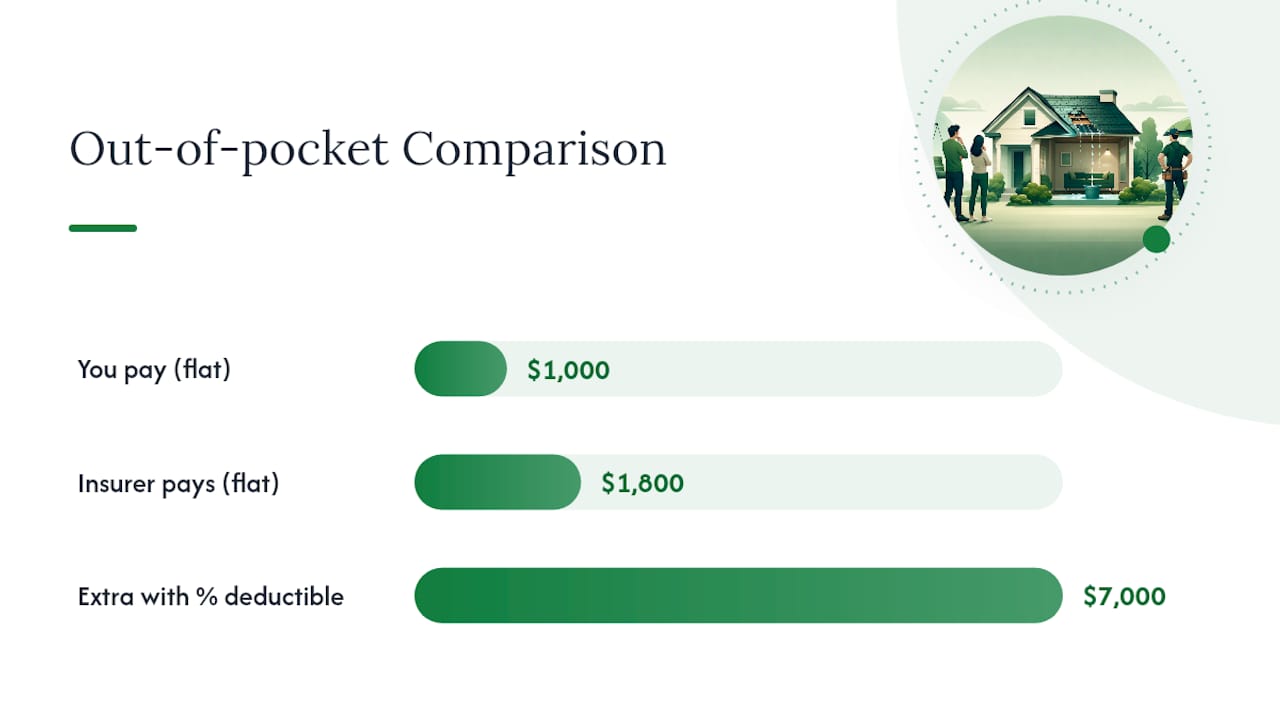
Wind and hail claims often work differently. Many carriers apply a percentage deductible instead of a flat dollar figure, and that percentage is calculated against your total dwelling coverage limit, not the cost of the roof repair itself.
Here’s how the two compare on a dwelling policy with a substantial coverage limit:
- Flat deductible example: On a roof repair costing several thousand dollars, you pay the flat deductible amount first, with the insurer covering the remainder.
- Percentage wind/hail deductible example: The deductible is a percentage of your dwelling coverage, which can require a large out-of-pocket amount before insurance pays, even for the same repair cost.
That’s an $7,000 difference in what you owe out of pocket, on the identical repair.
Percentage deductibles can equal or exceed the repair cost itself. For example, a 2% deductible on a high dwelling limit can result in substantial out-of-pocket costs, and some states permit even higher percentage caps, according to the Insurance Information Institute.
Check your declarations page for any peril-specific deductible before you assume your standard deductible applies to storm damage. If you live somewhere prone to high wind events, this single line item could be the most important number in your entire policy.
RCV vs. ACV: The Settlement Method That Decides Your Final Check
Your deductible is only half the equation. The other half is whether your policy pays Replacement Cost Value (RCV) or Actual Cash Value (ACV), and the gap between the two can be substantial.
RCV pays what it actually costs to repair or replace your roof today, no depreciation subtracted. ACV pays that same cost minus depreciation based on your roof’s age and expected lifespan. According to the North Carolina Department of Insurance, depreciation can significantly reduce the claim value for roofs about halfway through their expected lifespan before applying the deductible.
Picture a priced roof replacement with a deductible applied:
- Under RCV: You receive a payment close to the repair cost minus your deductible.
- Under ACV on a roof around halfway through its lifespan: The insurer reduces the claim based on depreciation before subtracting the deductible, resulting in a significantly lower payout and more out-of-pocket expense.
Many RCV policies pay in two installments. Insurers commonly issue an initial actual-cash-value check, then release the withheld depreciation once you complete repairs and submit final invoices. Confirm your settlement method on the declarations page now, not after a storm hits your neighborhood.
Is Filing a Claim Even Worth It?
Filing isn’t automatic just because you have coverage. A claim that barely clears your deductible can cost you more in future premiums than it saves you today.
Run through this before you call your insurer:
- Get a repair estimate first, ideally from a licensed roofer who can separate roof damage from cosmetic wear.
- Confirm whether a flat or percentage deductible applies to this specific cause of loss.
- Verify your settlement method, since ACV can shrink your payout well below what the repair estimate shows.
- Weigh the claim against your claims history and likely premium impact before you file.
As a general rule, skip filing when your repair cost sits at or below your deductible. You’d hand your insurer a claim on your record and get nothing in return. When repair costs run modestly above the deductible, weigh the premium increase against the payout you’d actually receive.
A small flashing leak repair estimated at $900 against a $1,000 deductible isn’t worth filing. A storm that tears off a third of your shingles and triggers a $22,000 replacement almost always is, even with a percentage deductible eating into the payout.
Pro Tip: Get two independent repair estimates before deciding. If both come in near your deductible, you likely have more negotiating leverage to pay out of pocket and skip the claim entirely.
Documenting the Leak: What Insurers Actually Want to See
Insurers approve claims faster when the paper trail does the arguing for you. Weak documentation is one of the most common reasons a legitimate claim gets delayed or denied.
Start with mitigation. A tarp over the damaged section or a temporary patch shows the insurer you tried to prevent further loss, which most policies actually require of you.
From there, build your file:
- Photos and video of the roof damage and any interior water stains, taken the same day you discover the leak.
- The date and approximate time you noticed the damage, plus any weather event that lines up with it.
- A written repair estimate from a licensed roofing contractor, itemized by scope and material.
- Copies of every email or claim note exchanged with your adjuster, including any verbal explanation you ask them to put in writing.
Be cautious of contractors offering “free” storm inspections that pressure you into signing a repair contract on the spot. The Better Business Bureau warns homeowners to verify licensing and get everything in writing before committing. For a leak with ambiguous cause, a licensed roofer or a public adjuster can help you push back on a maintenance-based denial.
Why a Licensed Roofer’s Report Carries Weight With Insurers
A credible inspection report names the cause, documents the scope with photos, and breaks the repair into a line-item estimate an adjuster can act on. That level of detail speeds up RCV payments and gives you real ammunition against a maintenance-denial letter.
A well-documented inspection and estimate from a licensed contractor materially improves your odds of a fair settlement, and it’s often the deciding factor when an insurer is on the fence between calling a leak “storm damage” or “wear and tear.”
roofing contractors carry and works daily with the coastal salt exposure and wildfire conditions specific to Southern California roofs. When a leak also damages drywall or flooring, having roofing and water-damage restoration handled under one roof keeps your claim documentation consistent from the first inspection through the final repair.
What Your Policy Probably Won’t Cover
Every homeowners policy carries exclusions that trip people up right when they need coverage most. Knowing them before a leak happens saves you a frustrating call to your adjuster.
Gradual deterioration tops the list. If your roof has been slowly failing for years, dripping a little more each rainstorm, your insurer will likely classify that as a maintenance issue rather than a covered loss. The same goes for pre-existing damage that existed before your policy started, which is why some insurers request a roof inspection before writing a new policy in the first place.
Poor workmanship from a prior repair is another common exclusion. If a previous contractor installed flashing incorrectly and it eventually fails, your insurer may deny the claim and point you back to that contractor’s warranty instead.
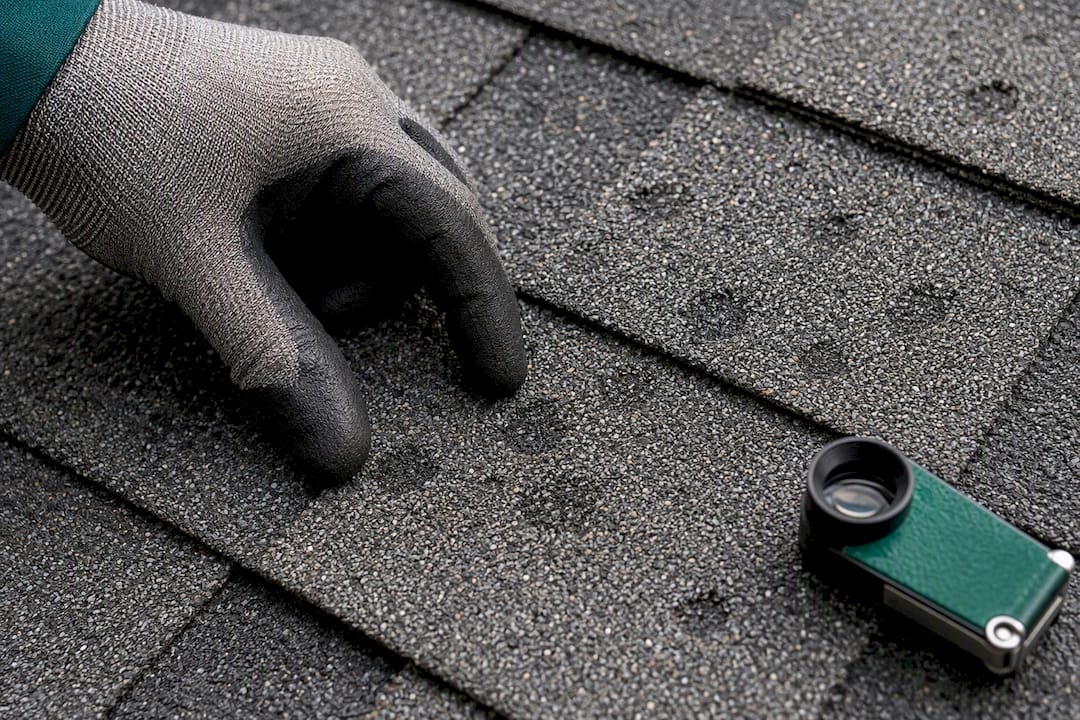
Many policies also exclude or limit coverage for cosmetic damage, such as granule loss or discoloration on shingles that doesn’t affect the roof’s function. Some carriers add a specific cosmetic damage exclusion endorsement in hail-prone regions, which can catch homeowners off guard when hail dents shingles without actually causing a leak.
Finally, watch for mold and long-term water damage exclusions. If a leak goes unreported for weeks and mold develops, insurers frequently deny that portion of the claim on the theory that prompt action would have prevented it. This is exactly why documenting the discovery date and mitigating quickly matters as much as the repair itself.
How Adjusters Figure Out What Caused Your Leak
Insurance adjusters build their determination around evidence, not guesswork, and understanding their process helps you prepare a stronger claim. The first thing an adjuster looks at is the pattern of damage. Wind damage tends to show missing or lifted shingles concentrated on one roof slope, usually facing the direction the storm came from. Hail leaves circular impact marks with exposed granules. A slow leak from age or poor maintenance instead shows gradual staining, soft decking, or rot that’s built up over a longer period.
Adjusters also cross-reference weather data. If you’re claiming wind damage, they’ll check historical wind speed records for your area on the date you reported the loss. A claim that doesn’t line up with any recorded severe weather event on that date raises red flags immediately.
Roof age and roofing material condition factor heavily into the determination too. An adjuster inspecting a 22-year-old asphalt shingle roof with granule loss throughout is more likely to attribute a leak to age than one inspecting a 4-year-old roof with a single storm-damaged section.
This is where your own documentation and a contractor’s independent inspection report can shift the outcome. If the adjuster’s initial assessment leans toward “wear and tear” and your roofer’s report shows clear impact damage consistent with a documented storm date, you have grounds to request a second look or formally dispute the determination.
How Roof Age Changes What You’ll Actually Collect
Roof age doesn’t usually change your deductible amount, but it changes almost everything else about your payout. Insurers increasingly factor roof age into both underwriting and claims decisions, and some carriers now cap or restrict RCV coverage on roofs beyond a certain age, often 15 to 20 years depending on the material.
An older roof also means a bigger depreciation hit under ACV settlement, since depreciation is calculated as a percentage of the roof’s expected lifespan already used up. A 3-year-old tile roof and a 22-year-old asphalt shingle roof can suffer the exact same storm damage and receive dramatically different payouts, purely because of the depreciation math running against the older one.
Some insurers also require roof age disclosures at renewal and may decline to renew a policy, or move a homeowner to an ACV-only roof endorsement, once a roof crosses a certain age threshold. If you’re not sure which settlement method applies to your specific roof, that’s a call worth making to your agent before you ever need to file.
Keeping up with routine maintenance and addressing minor repairs promptly can also affect how an adjuster reads your claim. A well-maintained older roof with clear maintenance records is a stronger claim candidate than one with visible neglect, even at the same age.
Getting Your Insurer to Reconsider a Deductible or Denial
You do have room to push back if a deductible or determination feels wrong, and insurers expect a reasonable percentage of policyholders to ask questions.
Start by requesting a written explanation for any decision that surprises you, whether it’s an unexpectedly high percentage deductible or a denial based on maintenance. Insurers are generally required to provide this in writing, and having it on paper gives you something concrete to challenge.
If you believe the adjuster misjudged the cause of loss, get a second inspection from a licensed roofing contractor and submit that report formally as a dispute. Independent documentation carries real weight, especially when it directly contradicts a “wear and tear” conclusion with photos showing clear storm impact.
You can also request your insurer’s internal appraisal process, a formal dispute mechanism written into most homeowners policies for disagreements over the amount of a covered loss. If that stalls, contact your state’s department of insurance. Consumer guidance from agencies like the Texas Department of Insurance exists specifically to help homeowners understand and challenge deductible and settlement disputes.
If you’re shopping for a new policy, remember that your deductible structure is often negotiable at the point of purchase. Ask your agent about swapping a percentage wind deductible for a flat one, or vice versa, based on which better fits your risk tolerance and budget.
Why Deductibles Aren’t the Same From One Policy to the Next
No two insurance companies write deductibles identically, and that variation is exactly why reading your own declarations page matters more than reading generic advice online. Some carriers apply a single flat deductible to every peril. Others carve out separate, higher percentage deductibles specifically for wind, hail, or named storms, layered on top of your standard flat deductible for everything else.
Policy type matters too. A standard HO3 homeowners policy behaves differently from a manufactured home policy or a landlord policy covering a rental property, even from the same insurer. Coastal and wildfire-prone regions, including much of Southern California, sometimes see insurers apply higher deductibles or more restrictive roof-age provisions than they would in lower-risk areas, given the elevated claims frequency in those zones.
Bundled policies, higher dwelling coverage limits, and even your claims history can all shift which deductible options an insurer offers you at renewal. The only reliable way to know your exact terms is to read your current declarations page line by line, or ask your agent to walk through it with you, rather than assuming your policy mirrors a neighbor’s or a number you saw quoted online.
Author Perspective: Practical Advice for Homeowners in the U.S.
Document everything, compare your repair estimate against your deductible before you call your insurer, and get a licensed inspection whenever the cause of the leak is anything short of obvious. Most disputes I see come down to a homeowner assuming their standard deductible and RCV settlement apply when their policy actually specifies a wind percentage deductible and ACV. Check your declarations page first. It settles more arguments than any phone call to your agent will.
— David
Getting a Straight Answer on Your Roof Damage
Figuring out whether your leak qualifies for coverage, and what you’ll actually collect after your deductible, starts with an honest inspection, not a guess. Smartroofingpros provides detailed on-site inspections and itemized estimates that document cause, scope, and repair cost clearly enough to support an insurance claim, whether you need a targeted roof repair or a full roof replacement.
As a CertainTeed Premier ShingleMaster with direct experience in Southern California’s coastal salt exposure and wildfire conditions, Smartroofingpros also handles water damage restoration alongside roof repair, so interior damage from a leak gets addressed under the same estimate instead of a second contractor and a second bill. If you’re weighing whether your roof damage is worth filing a claim, schedule an on-site inspection through the San Diego roofing services page and get a written estimate before you call your insurer.
Sources
- Actual Cash Value vs Replacement Cost Value (NC Department of Insurance)
- Does homeowners insurance cover roof leaks? (Geico)
- Background on hurricane and windstorm deductibles (Insurance Information Institute)