2026 Roof Leak Repair Costs: $150–$1,500 for Homeowners
Most roof leak repairs cost between $150 and $1,500, with many homeowners landing near $600 to $850 for a single-source leak like a pipe boot or a flashing gap. If water is actively coming in right now, the priority isn’t researching pricing. It’s tarping the area or calling a roofer today to stop the damage from spreading.
TL;DR:
- Repair costs for a single-source leak typically range from $150 to $1,500, with median prices around $600 to $850 for common asphalt shingle issues.
- Trip fees, labor, and emergency surcharges often make even small repairs cost $350 to $1,500 or more, especially for after-hours or storm response calls.
- Costs vary significantly depending on leak source, with flashing repairs and widespread damage pushing the bill toward $1,000 to $6,000+ when extensive work such as decking replacement is necessary.
- The size of the leak source, roofing material, roof pitch, and access affect repair estimates, with higher costs for steep, multi-story, or material-sensitive roofs.
- A detailed, itemized inspection and accurate assessment of interior or hidden damage can prevent costly surprises and help decide between repair or full roof replacement.
Table of Contents
- Roof leak repair cost: quick summary and why quotes vary so much
- Cost by leak source: what drives the price up or down
- What actually moves your repair bill up or down
- Repair now or replace the whole roof?
- DIY fixes versus hiring a professional
- Getting a reliable roof leak repair estimate
- When the leak causes interior damage, and how insurance fits in
- Why credentials matter more than the lowest bid
- Request an on-site estimate from Smart Roofing & Restoration
- Sources
Roof leak repair cost: quick summary and why quotes vary so much
A single-source leak, one bad pipe boot, one lifted shingle, one flashing seam, typically runs $150 to $1,500, with national medians clustering around $600 to $850 for common asphalt shingle repairs. Broader industry surveys put the overall roof repair average closer to $1,150, with most jobs falling between $400 and $1,900 once you count larger jobs that aren’t strictly leak-only. Either way, a full roof leak repair estimate almost always exceeds the cost of the physical materials involved.
Why does a $15 tube of sealant turn into a $400 invoice? Three things drive that gap:
- Trip fees. Most contractors charge a minimum service call of $150 to $350, regardless of how small the fix is, because sending a crew and equipment to your roof costs money even before a single shingle gets touched.
- Labor and access. Locating a leak, setting up ladders safely, and working on a pitched roof takes far longer than the repair itself.
- Emergency surcharges. After-hours or storm-response calls typically add $200 to $500 on top of standard pricing, and an emergency tarp installed by a professional crew can run $400 to $900 versus $40 to $80 in materials if you do it yourself.
Quick stat: Most professional roof leak repairs fall between $350 and $1,500, with simple fixes at the low end and multi-point damage pushing toward the top.
Cost by leak source: what drives the price up or down
Not all leaks cost the same to fix, and knowing where yours falls helps you sanity-check a quote before you sign anything.
| Leak Source | Typical Installed Cost | What Drives the Price |
|---|---|---|
| Vent or pipe boot | $150–$400 | Cheapest fix; often solved with a retrofit collar over the old boot |
| Loose or missing shingles | $200–$600 | Rises with the number of shingles and matching an aged roof’s color |
| Flashing (chimney, wall, step) | $300–$900 | Labor-intensive; poor flashing work is a common source of repeat leaks |
| Valley leaks | $350–$1,000 | Valleys funnel large volumes of water, so seams must be nearly perfect |
| Skylight leaks | $300–$1,000 | Depends on whether the skylight itself or just the surrounding flashing needs work |
| Widespread damage with decking replacement | $1,000–$6,000+ | Rotted decking, insulation, and interior repairs stack on top of the roof work |
A vent boot replacement stays cheap because it’s a contained, well-understood fix, often a rubber or Perma-Boot style collar slipped over the old pipe with minimal shingle disruption. Loose shingles cost more as the count climbs, especially if the roofer has to hunt down a color match on a roof that’s faded over ten or fifteen years.
Flashing repairs deserve extra attention. Flashing failures account for roughly 40 to 50 percent of residential roof leaks, which means a cheap quote that skips a proper flashing inspection is often cheap for a reason. Valley and skylight leaks sit in similar territory because both concentrate water flow into a small, failure-prone area.
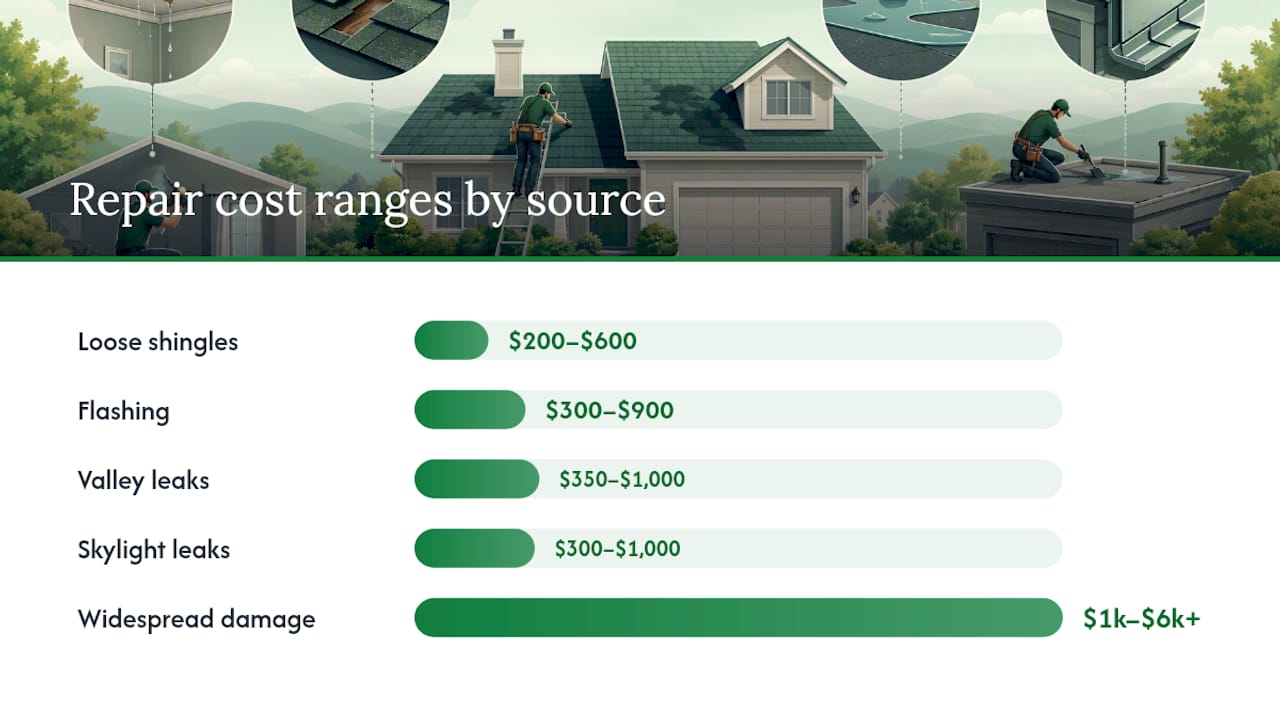
The real cost jump happens with widespread or hidden damage. Once a roofer opens things up and finds rotted decking, saturated insulation, or a leak that’s been active for weeks, costs commonly climb to $1,000 to $6,000 or more, particularly once drywall, framing, or mold remediation gets added to the scope.
What actually moves your repair bill up or down
Two roofs with identical leaks can generate very different quotes, and it usually comes down to a handful of predictable factors.
- Roofing material. Asphalt shingle repairs are generally the least expensive to source and install. Metal roof repairs often run higher due to specialized fasteners and sealants, and tile or slate repairs cost more still because individual tiles are brittle and require careful handling to avoid cracking neighboring pieces.
- Pitch, height, and access. A steep roof or a three-story home means more time spent on safety setup and slower, more careful movement, which shows up directly in labor hours.
- Hidden damage. What starts as “replace one shingle” can turn into decking replacement or ventilation repair once the roofer pulls back the surface layer.
- Seasonal demand. Spring and post-storm periods often bring longer wait times and, in some markets, temporary material surcharges as demand for supplies spikes.
Pro Tip: Ask any contractor for the material cost and labor cost as separate line items on your quote. If a bid lumps everything into one number, that’s often a sign the scope wasn’t inspected closely enough to itemize it.
Repair now or replace the whole roof?
The math usually comes down to one question: how much of the roof’s useful life is left? A rough industry rule of thumb treats repair costs approaching 30 to 50 percent of a full replacement’s price as a signal to at least get a replacement quote for comparison, especially when the roof is already near the end of its expected service life.
A few scenarios where replacement tends to be the smarter financial move:
- Your roof is 18 to 20+ years old for asphalt shingle and this is the second or third leak repair in as many years.
- The manufacturer’s warranty has already expired, so future leaks carry no coverage cushion.
- An inspection reveals damage across multiple sections rather than one isolated spot.
If your roof is newer, under warranty, and the leak is genuinely isolated, repair almost always makes more financial sense than replacement.
DIY fixes versus hiring a professional
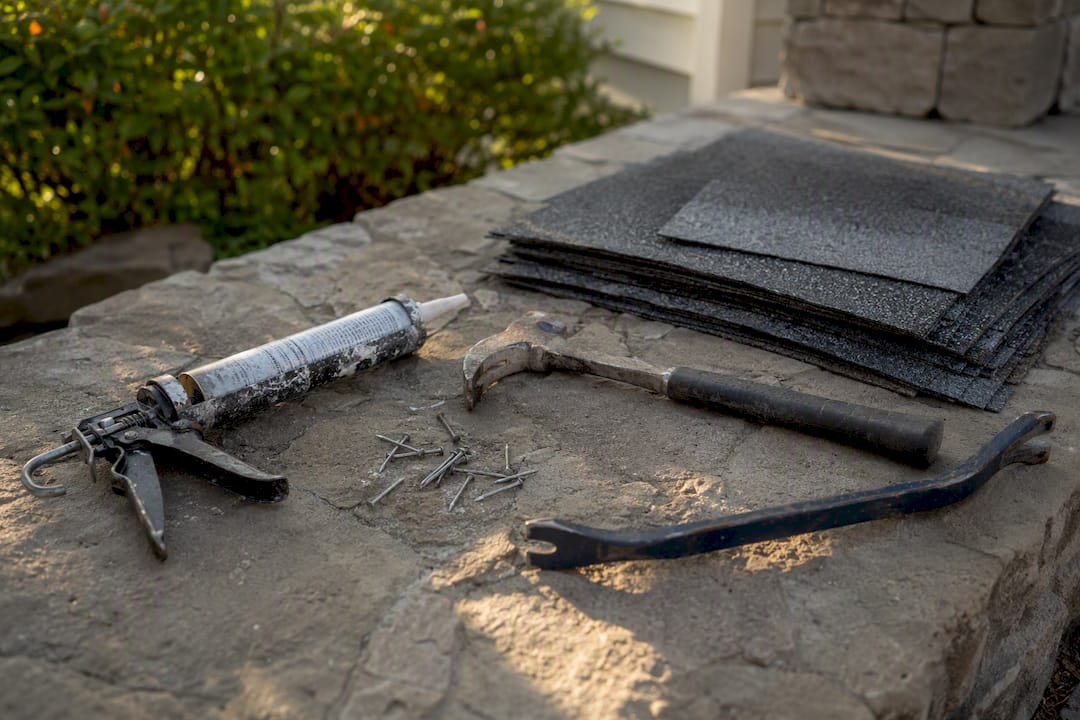
A handful of leak fixes are reasonable for a comfortable homeowner to tackle: a retrofit vent boot collar or swapping a single damaged shingle can cost as little as the price of materials, often under $50, if you’re working on a low-slope, easily accessible roof.
Beyond that, the math shifts fast. OSHA’s fall protection standards exist because rooftop work above six feet carries real injury risk, and that risk is exactly why professional crews budget for harnesses, anchor points, and extra labor time on steep or multi-story roofs. It’s not padding the invoice. It’s the actual cost of doing the work safely.
- Locating the true source of a leak often requires attic access and experience reading water stains, something DIY patch jobs frequently get wrong.
- A poorly sealed DIY patch can trap moisture rather than stop it, turning a $50 fix into a $2,000 decking replacement within a year or two.
- Proper harness use and ladder stabilization, covered in general gutter and rooftop safety guidance, matter as much for a homeowner attempting a repair as for a crew.
Getting a reliable roof leak repair estimate
A trustworthy inspection covers more ground than a quick look from the driveway. Before you accept any bid, confirm the contractor did these things:
- Checked the attic for water stains, damp insulation, or daylight coming through the decking.
- Inspected all flashing points, chimneys, walls, valleys, since these cause the majority of leaks.
- Probed the decking near the leak to check for soft spots or rot, not just the surface shingles.
- Itemized the quote into materials, labor, trip fee, and any permit costs, rather than one lump number.
- Disclosed warranty terms covering both materials and workmanship.
Ask directly about the trip fee, what an emergency tarp would cost if needed, and whether the estimate assumes the leak is isolated or could expand once they open the roof. A thorough inspection up front prevents costly surprises mid-repair.
When the leak causes interior damage, and how insurance fits in
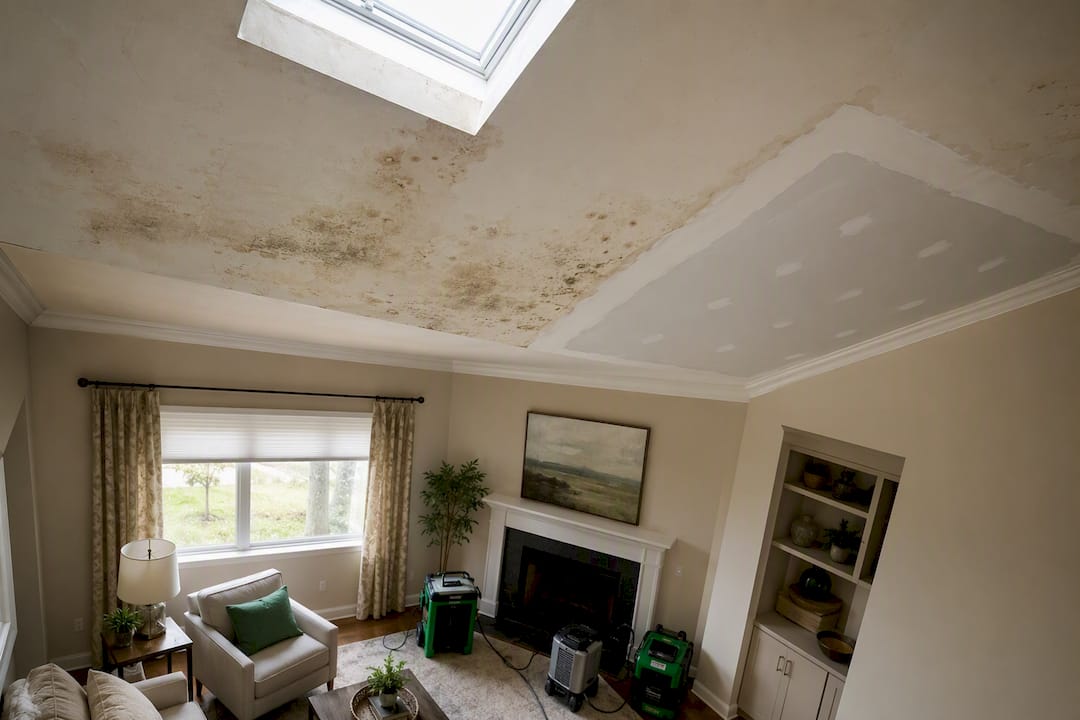
Water rarely stays contained to the roof. Drywall repair typically runs $300 to $1,000 per affected area, insulation replacement adds a few hundred dollars more, and mold remediation can range from $500 to over $3,000 depending on how far it’s spread, guidance the CDC outlines in detail given the health risks involved. A single structural framing repair can add another $500 to $2,000.
Timing matters more than most homeowners realize. A leak active for 24 hours might add $300 to $1,500 in repairs, but left unaddressed for six weeks, total costs including interior work can climb to $2,500 to $12,000.
- Insurance typically covers sudden, accidental damage (a storm-torn shingle) but excludes gradual wear or neglect.
- Most policies carry deductibles between $500 and $2,000, so small leak repairs often don’t clear the threshold to be worth filing.
- Photograph damage immediately and keep dated notes; documentation before repairs begin meaningfully improves claim approval odds.
Why credentials matter more than the lowest bid
roofing contractors carry, which bring manufacturer-backed warranty coverage that most repair-only outfits can’t offer. Handling both the roofing repair and the water damage restoration side under one roof means a homeowner isn’t coordinating two separate contractors and two separate invoices for the same leak. Case studies and homeowner testimonials from Southern California projects are available on request, and every estimate starts with an honest look at whether repair or replacement actually makes financial sense for your specific roof.
— David
Request an on-site estimate from Smart Roofing & Restoration
Smart Roofing & Restoration gives San Diego, Riverside, and Orange County homeowners something most repair calls skip: an honest, itemized answer before any work begins, not a padded invoice after the fact.
Every visit includes a detailed on-site inspection covering the attic, flashing, and decking, followed by a written estimate with no hidden line items. If your leak is active, the team handles emergency tarping to stop damage from spreading while your permanent repair gets scheduled. And because Smart Roofing & Restoration is a certified CertainTeed Premier ShingleMaster, repairs and full roof replacements alike come backed by manufacturer warranty coverage that many local contractors simply can’t extend to customers.
Scheduling is straightforward: request a visit, get a same-week on-site assessment in most cases, and walk away with a clear, written roof repair estimate before anyone climbs a ladder. If your roof uses asphalt shingle materials specifically, ask about matching options during your visit. Start by requesting your free roofing estimate today.
Sources
- Roof Leak Repair in 2026: Cost, DIY vs Pro | The Roofing Brief
- Roof Leak Repair Cost | 2026 Price Guide
- Fall protection | Occupational Safety and Health Administration
- Guide to mold cleanup | Centers for Disease Control and Prevention