
Prevent Mold: Stop Roof Leak Water Damage in 48 Hours, Homeowners
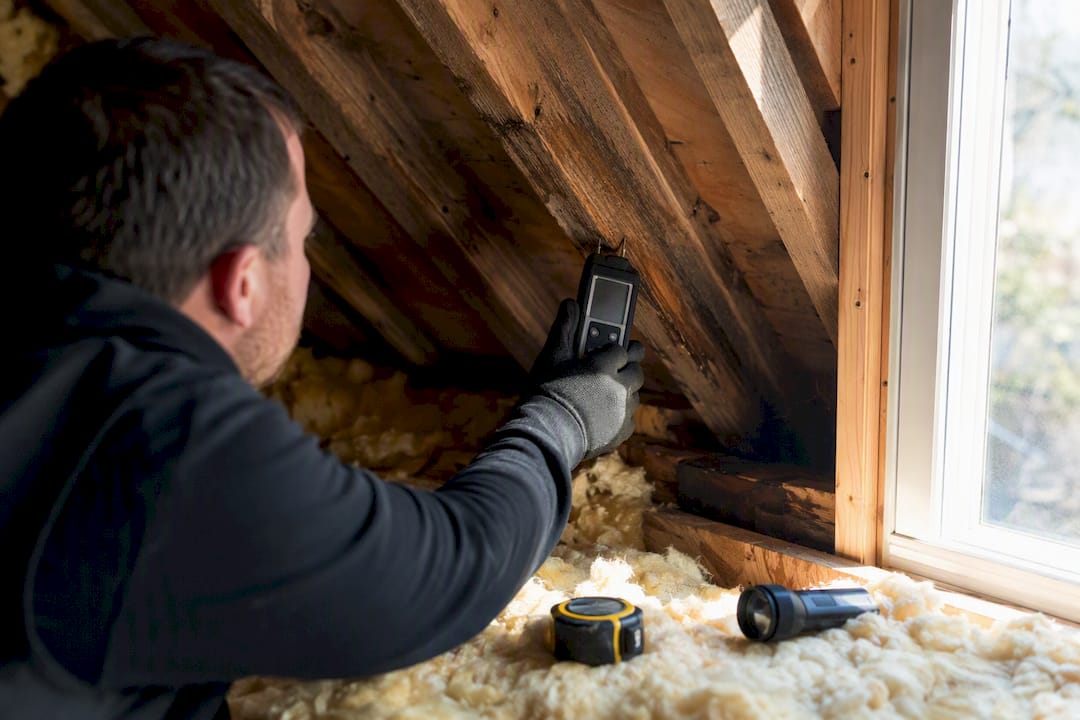
Stop the water first. Grab buckets or a tarp to slow the intrusion, move furniture and valuables away from the drip line, then photograph everything before you touch it. Once the leak is under control, the next call is a licensed roofer to fix the source, followed by an honest look at whether the affected materials need drying or full remediation.
TL;DR:
- Immediate water containment and documentation are crucial to prevent further damage and support insurance claims.
- Signs like persistent ceiling stains, mold, and damaged or missing shingles indicate evolving or long-term leaks requiring prompt inspection.
- Water often travels from the entry point, making attic inspections and controlled hose tests essential to locate the actual leak source.
- Repair costs vary from a few hundred dollars for small fixes to thousands for decking replacement or full roof overhaul, depending on severity.
- Insurance typically covers sudden storm-related damage but excludes deterioration or pre-existing issues, emphasizing the need for thorough damage documentation.
Table of Contents
- What Are the Signs of a Roof Leak Causing Water Damage?
- How Do You Find Where a Roof Is Leaking?
- What Should You Do Immediately After Discovering a Leak?
- What Does It Cost to Repair a Roof Leak?
- Does Homeowners Insurance Cover Roof Leak Damage?
- How Fast Does Mold Grow After a Roof Leak?
- Why an Integrated Roof and Restoration Approach Matters
- Get Your Roof and Water Damage Assessed Together
- Sources
What Are the Signs of a Roof Leak Causing Water Damage?
A ceiling stain doesn’t always mean an active leak, but a few patterns tell you how urgent the problem is. Brownish rings with a darker center usually mean repeated soaking, not a one-time event. Bulging drywall, a musty odor, or damp insulation in the attic signal water has been sitting for a while, and that changes your timeline for calling someone.
From the ground, you can spot a lot without climbing anything: missing or curled shingles, rusted or lifted flashing around chimneys and vents, gutters packed with debris, or a valley where two roof slopes meet that looks worn or patched.
Timing matters too. Leaks that show up only during wind driven rain often point to flashing or shingle gaps. Leaks that appear only in winter suggest ice damming. And a stain that never seems tied to weather at all might not be a roof leak.
- Ceiling stains or bulges, especially near exterior walls or valleys
- Musty smell or visible mold on drywall or trim
- Missing, cracked, or curling shingles visible from the yard
- Rusted flashing, clogged gutters, or debris buildup in valleys
- Staining that appears year round rather than after storms
Pro Tip: If the stain shows up regardless of weather, check plumbing vents and HVAC condensate lines in the attic before assuming it’s a roofing issue — a pattern restoration specialists see often enough to check first.
How Do You Find Where a Roof Is Leaking?
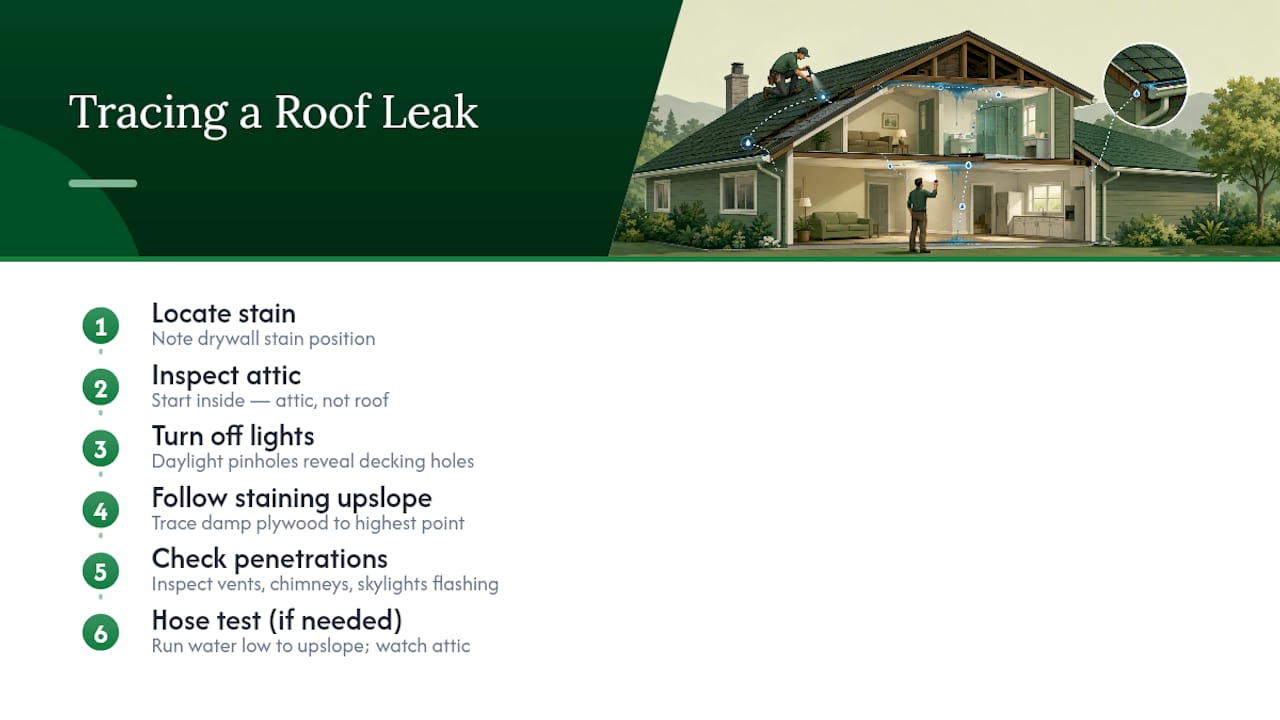
The stain on your ceiling is almost never directly below the hole in your roof. Water runs along the underside of the roof deck and down rafters before it finds drywall, sometimes traveling several feet from the actual entry point. That’s why chasing the visible stain straight up usually leads nowhere, and why tracing the leak properly starts in the attic, not on the roof.
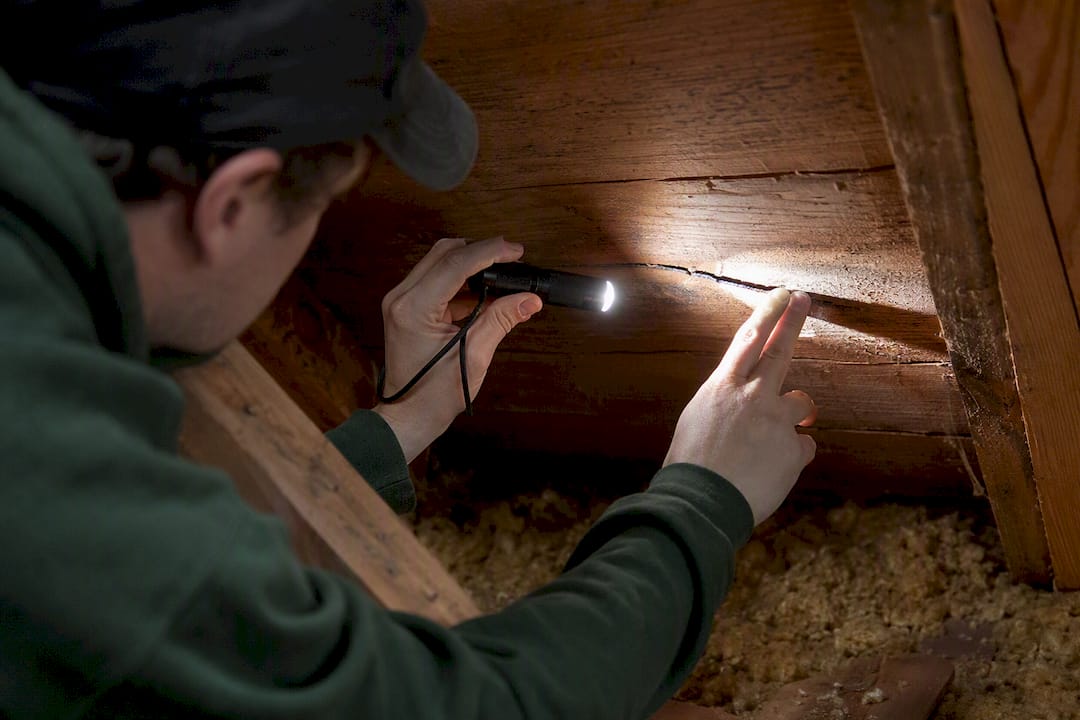
Turn off the attic lights during daylight hours and look for pinholes of light coming through the decking. Check for damp or discolored plywood, then follow any staining upslope toward its highest point, since that’s typically closer to the actual entry. Pay close attention to roof penetrations: plumbing vents, chimneys, and skylights account for a disproportionate share of leaks because their flashing seals wear out faster than the shingles around them.
If the source still isn’t obvious, a controlled hose test can confirm it. This means running water over one section of roof at a time, starting low and working upslope, while someone watches inside the attic for the first sign of water. It takes patience and a second person, and if your roof pitch or height makes this unsafe to test yourself, a roof inspection from a licensed contractor gets you the same answer without the risk.
What Should You Do Immediately After Discovering a Leak?
Handle safety before anything else. Standing water near light fixtures or outlets is a shock hazard, so cut power to that circuit if water is pooling nearby, and stay off a wet or sagging roof entirely until a professional assesses it.
- Contain the water with buckets, towels, or a tarp over furniture
- If a ceiling is bulging with trapped water, a small controlled puncture at the low point can relieve pressure and prevent a larger collapse
- Move furniture, electronics, and rugs out of the drip zone
- Arrange emergency tarping if the roof itself is actively letting water through
- Photograph and video the damage before cleanup, including timestamps and notes on the weather
- Keep receipts for any emergency repairs, tarps, or wet/dry vacuum rentals
- Avoid throwing out damaged materials until you’ve documented them
- Don’t start permanent repairs until you know whether you’re filing a claim
What Does It Cost to Repair a Roof Leak?
Repair cost depends almost entirely on the cause. A worn vent boot or a section of lifted flashing is a quick fix. Rotted decking underneath a long-term leak is a different job entirely, both in labor and materials.
- Flashing resealed or replaced: typically a smaller repair job
- Vent boot replacement: among the more common and least expensive fixes
- Shingle patching: low cost when isolated to a small area
- Valley repair: more involved due to the layered flashing underneath
- Deck replacement: the most expensive category, since rotted plywood has to come out before new roofing goes back on
Most isolated repairs run somewhere between $300 and $1,500, though your local labor rates and material costs will shift that range. Decking replacement or a partial re-roof costs considerably more and varies by square footage. A full roof replacement usually gets triggered by roof age, multiple leak points across different sections, or decking rot extensive enough that patch repairs won’t hold. If you’re filing an insurance claim, an adjuster’s inspection often plays a role in determining whether repair or replacement is the appropriate outcome. If your roof is nearing the end of its service life already, ask about roof replacement options rather than sinking money into repeated patch jobs.
Does Homeowners Insurance Cover Roof Leak Damage?
Coverage comes down to cause. Damage from a sudden, covered peril, wind, hail, a fallen tree limb, is generally covered by standard homeowners insurance. Damage from wear and tear, missed maintenance, or a roof that was already past its useful life is typically excluded, no matter how bad the interior damage gets.
Interior damage and personal property can be covered under the same claim when the leak stems from a covered event, though policy limits, deductibles, and mold sublimits vary by carrier. Some insurers offer a separate concealed water endorsement, which covers slow leaks inside walls that go undetected, usually for an added premium worth weighing against your roof’s age and condition.
- Document damage immediately with photos, video, and written notes
- Notify your insurer promptly, since delayed reporting can complicate a claim
- Keep every receipt tied to emergency repairs or temporary tarping
- Wait for the adjuster’s inspection before making irreversible repairs
- Ask specifically whether mold remediation falls under your policy’s sublimit
State Farm’s homeowner guidance echoes the same sequence: document first, then call, then let the professionals confirm scope before repairs move past the temporary stage.
How Fast Does Mold Grow After a Roof Leak?
Mold doesn’t wait around. The EPA notes that mold can begin colonizing wet building materials within 24 to 48 hours of exposure, and visible growth often follows within three to seven days if the area stays damp. That short window is why drying out affected materials fast matters as much as fixing the roof itself.
Industry guidance under ANSI/IICRC S520 recommends professional remediation when visible contamination exceeds a certain threshold, rather than a DIY cleanup with bleach and a fan.
- Stop the leak at the roof first
- Map moisture with meters and thermal imaging to find the real extent of saturation
- Dry and dehumidify affected areas, removing any materials that can’t be salvaged
- Run clearance testing before reconstruction begins
Fixing the roof without addressing what’s already wet underneath is a common misstep. Restoration specialists point out that a sealed roof doesn’t remove mold that’s already colonized attic insulation or drywall, it just stops new water from making things worse.
Why an Integrated Roof and Restoration Approach Matters
contractors carry, which affects the warranty strength behind installation work. This matters here because a roof leak rarely stays a roofing-only problem. It becomes an inspection, a repair, and often a restoration project all at once. Ask any contractor for written findings, actual moisture readings, and a clear scope separating cosmetic fixes from structural drying. If your estimate doesn’t include those three things, you don’t have the full picture yet.
— David
Get Your Roof and Water Damage Assessed Together
Smart Roofing & Restoration exists so you don’t have to juggle a roofer and a restoration company separately while your ceiling drips. If you’re already dealing with a leak, an inspection pairs a detailed roof assessment with moisture readings, so you get one written scope covering both the repair and any drying or remediation work, not two contractors pointing at each other.

That’s especially valuable for homes with tile roofing or aging shingle systems in coastal Southern California, where salt exposure accelerates flashing wear in ways a generic inspection can miss. Whether the fix turns out to be a roof repair or coordinated water damage restoration, you get a single on-site estimate with no hidden costs before any work starts. If your ceiling has a stain you can’t explain, request an inspection now and get an answer instead of a guess.
Sources
- Does homeowners insurance cover roof leaks? | Progressive
- How to spot a roof leak and what to do | State Farm
- Water stain on ceiling: trace it to the roof source | The Roofing Brief
- Water Damage From a Roof or Flashing Leak: Ceiling Stains, Attic Mold & Who to Call First | Prime Restoration